Learning from Recovery: Rural Rivers, Community, and the Politics of Environmental Care
Ecosystems, Well-Being, and the Return of Care
ENVIRONMENTHERITAGE
Okorie Amah
1/9/20263 min read
A river does not announce its recovery; it teaches it. Its lessons arrive quietly—through clearer water, the sudden reappearance of fish, and the subtle shifts in how people move, watch, and speak around it. In places where rivers are woven into daily life, ecological change is not only observed but also felt, interpreted, and learned through lived experience.
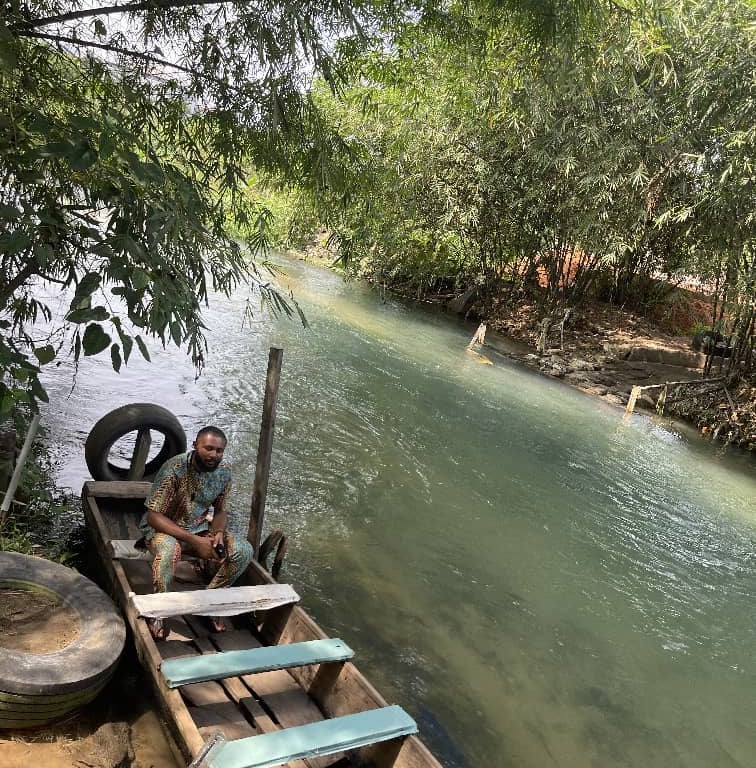
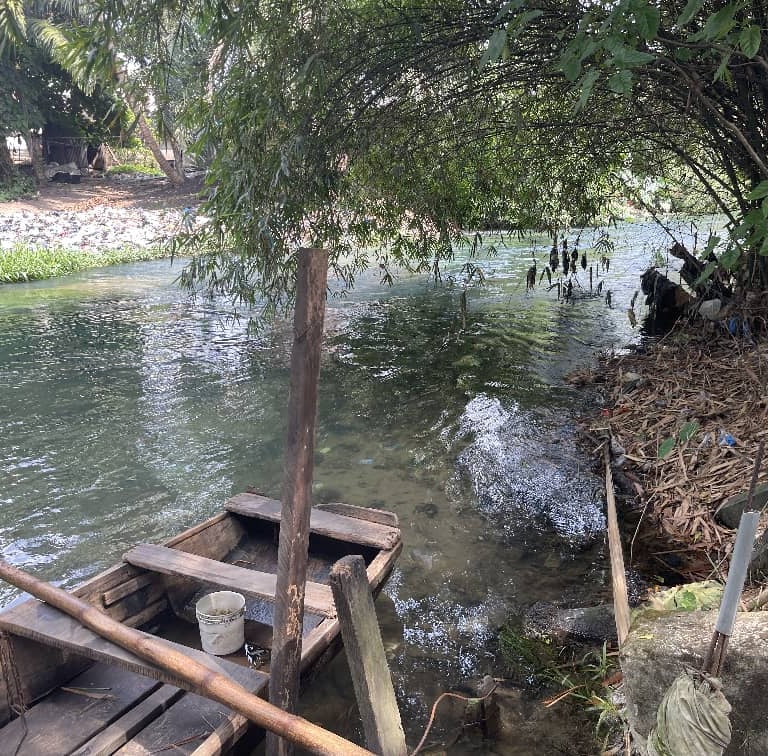
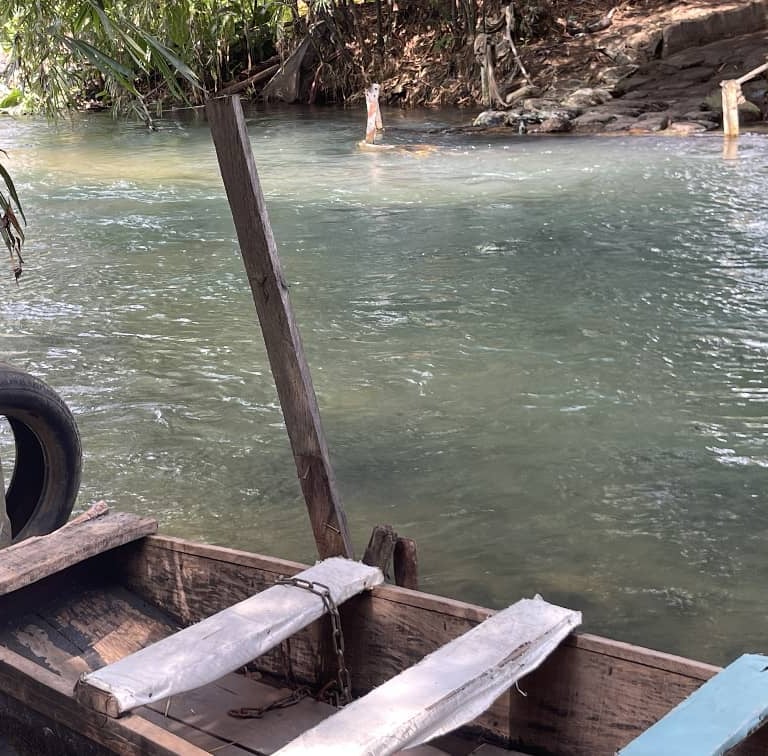
This photograph was taken at a rural riverbank in Aba, southeastern Nigeria, shortly after the relocation of an abattoir that had operated downstream for years. Residents described how meat processing involved the daily burning of car tyres, with ash, blood, and waste flowing untreated into the river. Over time, the water darkened, and aquatic life disappeared. People adapted by withdrawing from the river—limiting contact, reducing some economic activities at the riverbanks, discouraging children from playing nearby, and altering livelihoods around a river that no longer supported well-being. Environmental degradation here was not abstract; it translated directly into anxiety, loss, and behavioral change.
Then the abattoir was moved. There was no formal environmental education campaign, nor any public messaging about ecosystem recovery. People noticed changes within weeks as the water cleared. The smell faded, and fish, long absent, returned. What followed was not just ecological recovery but learning.
I sat quietly in a wooden canoe tied to the bank, observing the river and community members coming to it. The landscape exhibited material traces of socio-ecological adaptation and embodied memory: repurposed tyres, wooden planks worn smooth through repeated use, and a shoreline continually reworked through cautious, incremental engagement. These artefacts reflect a relational mode of environmental interaction grounded in attentiveness rather than extraction, with practices recalibrated through experiential knowledge and sustained by a reconfigured trust in the river as a living, responsive system.
For the community, the return of fish carried meaning far beyond biodiversity. It was interpreted as confirmation that the river responds to how it is treated. One community member said, “When the abattoir was moved, and burning stopped, the river rested.” Such interpretations reveal deeply held environmental values, where ecosystems are understood as relational rather than inert, capable of both decline and recovery depending on human conduct.
This moment reveals how ecosystem health and human well-being are co-produced through experience and learning, not merely through policy design. As water quality improved, people reported feeling safer using the river again. Children returned to the banks, and conversations shifted from avoidance to care. Behavioral change followed ecological change, reinforcing a feedback loop in which improved environmental conditions strengthened pro-environmental values and practices. Importantly, this was not a case of communities being trained to behave differently. Recovery occurred because a source of harm was removed. What followed was situated learning: people observed cause and effect, recalibrated their relationship with the river, and adjusted behavior accordingly. This challenges dominant adaptation narratives that place responsibility for resilience on individuals rather than on structural conditions.
From a well-being perspective, the river’s recovery restored more than material benefits. It revived a sense of dignity, agency, and moral reassurance. People spoke with relief rather than celebration. The river’s response affirmed long-held beliefs that care matters and that restraint can be as powerful as intervention. This aligns with justice-oriented understandings of sustainability, where well-being depends on fair governance and the removal of unequal environmental burdens. The recovery remains fragile. Residents know this; they watch closely, aware that harmful activities could return. Yet something enduring has shifted: the river has become a teacher again, demonstrating that ecosystems remember, respond, and shape how humans learn to live with them.
Standing by the water now, people do not speak of control; they speak of balance. The river flows on, carrying a lesson that is both ecological and ethical: when harm leaves, life returns, and when ecosystems recover, so too can the values and behaviors that sustain human well-being. This illustrates how rural adaptation to environmental change is grounded not only in policy or technology but also in embodied learning, relational values, and the removal of structural sources of harm. By foregrounding well-being, dignity, and moral reassurance alongside material recovery, this work advances our research goal about how rural communities manage natural resources, recalibrate livelihoods, and sustain care-based environmental governance amid socio-ecological transformation.