How Climate Models Can Help Rural Farmers Understand and Respond to Land Degradation
Climate Modelling
ENVIRONMENTCLIMATE CHANGE
Okorie Amah
11/26/20252 min read
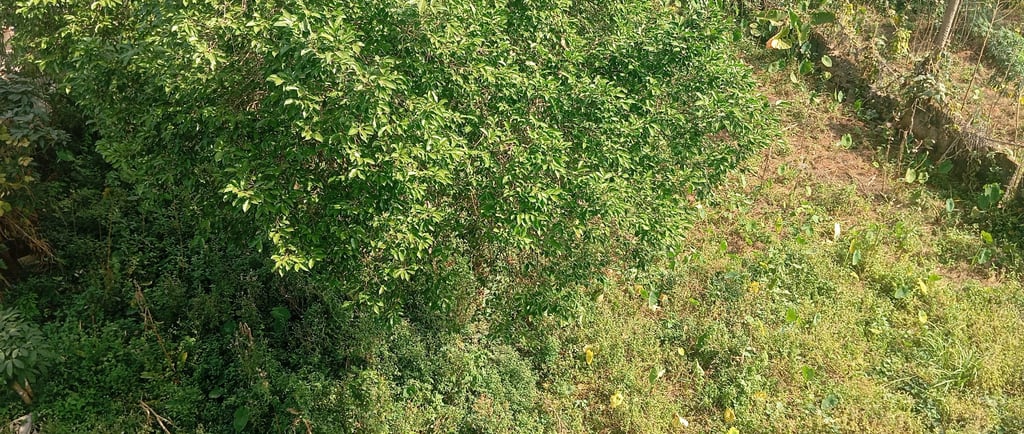
Land degradation is one of the greatest hidden threats to rural farming communities today. To ensure food security amidst this growing global population, healthy land resources and ecosystems must be maintained. Studies have shown that our current agricultural practices are contributing more to the eroding of the soil, 100 times faster than the natural processes replenishing them. Every year, millions of hectares of farmland lose soil fertility due to erosion, declining soil structure, flooding, and extended droughts. For many farmers, land degradation is interpreted as yield reduction, increased production costs, and reduced farm income. The definition of land degradation in the United Nations Convention to Combat Desertification (UNCCD) gives explicit recognition to climatic variations as one of the major factors contributing to land deterioration. Fortunately, climate models are emerging as a powerful tool that enables rural farmers to anticipate future climate risks—especially those tied to soil degradation—so that preventive actions can be taken early.
Rural farmers across Nigeria are witnessing rapid environmental deterioration, yet many lack the scientific foresight needed to anticipate how their land will change over time. Climate models provide this foresight by projecting future rainfall, temperature, and land conditions with increasing precision. During a recent visit to a farming community in Enugu State, where we discussed with farmers the brunt of climate change on their farms, it was gathered that unpredictable weather ultimately destabilises their agricultural routines. These experiences reinforce why local understanding of climate model projections is essential for preparing rural communities to proactively confront land degradation rather than the overt, traditional reactive approach.
How Rainfall Variability Influences Land Degradation
Farmers described significant shifts in rainfall patterns: delayed onset, abrupt early cessation, and concentrated short storms. Such variability is a direct trigger of land degradation, intensifying runoff, nutrient loss, gully formation, and soil infertility. Climate models help translate these abrupt experiences into structured long-term understanding. By forecasting rainfall decline, extreme rainfall spikes, and soil moisture deficits, climate models provide rural communities with evidence-based projections that explain why their lands are deteriorating and where degradation pressures will intensify in coming decades.
How Climate Models Enable Targeted Land Management Responses
The primary value of climate models lies in their ability to inform precise countermeasures. Farmers and agricultural extension officers can use climate projections to guide the adoption of erosion-control structures, mulching and cover cropping, drought-resistant seed varieties, seasonal planting adjustments, micro-irrigation, and agroforestry expansion. More importantly, climate model outputs help identify which farmlands require intervention first, between erosion hotspots, heat-exposed ridges, declining wetlands, and other areas of severe expected vegetation loss. This transforms land management from guesswork into strategic adaptation backed by climate evidence.
Strengthening Community-Level Resilience
When simplified and communicated through maps, community meetings, farmer field schools, and local extension programmes, climate models build shared awareness of future risks. This encourages coordinated rehabilitation of degraded lands, rather than scattered individual efforts. Communities can jointly implement watershed protection, communal tree belts, dry-season water storage, and soil restoration activities in areas identified as high-risk by climate projections. With this approach, climate modelling functions as a collective planning tool that strengthens resilience against long-term land decline.
Overall, climate models are indispensable to rural resilience because they shift farmers from uncertainty to informed action. The experiences of farmers in Enugu highlight worsening land degradation linked to changing climatic patterns, but they also illustrate the pressing need for anticipatory knowledge. When rural communities understand future climate scenarios, they are better positioned to conserve soil, safeguard productivity, and protect their livelihoods. Climate models, therefore, are not abstract scientific exercises; they are practical instruments for defending the land that sustains rural societies.