From Frustration to Innovation: How Youth are Reshaping Rural Futures Through Digital Agriculture
YOUTH IN AGRICULTURE
Peace Odoh
1/21/20263 min read
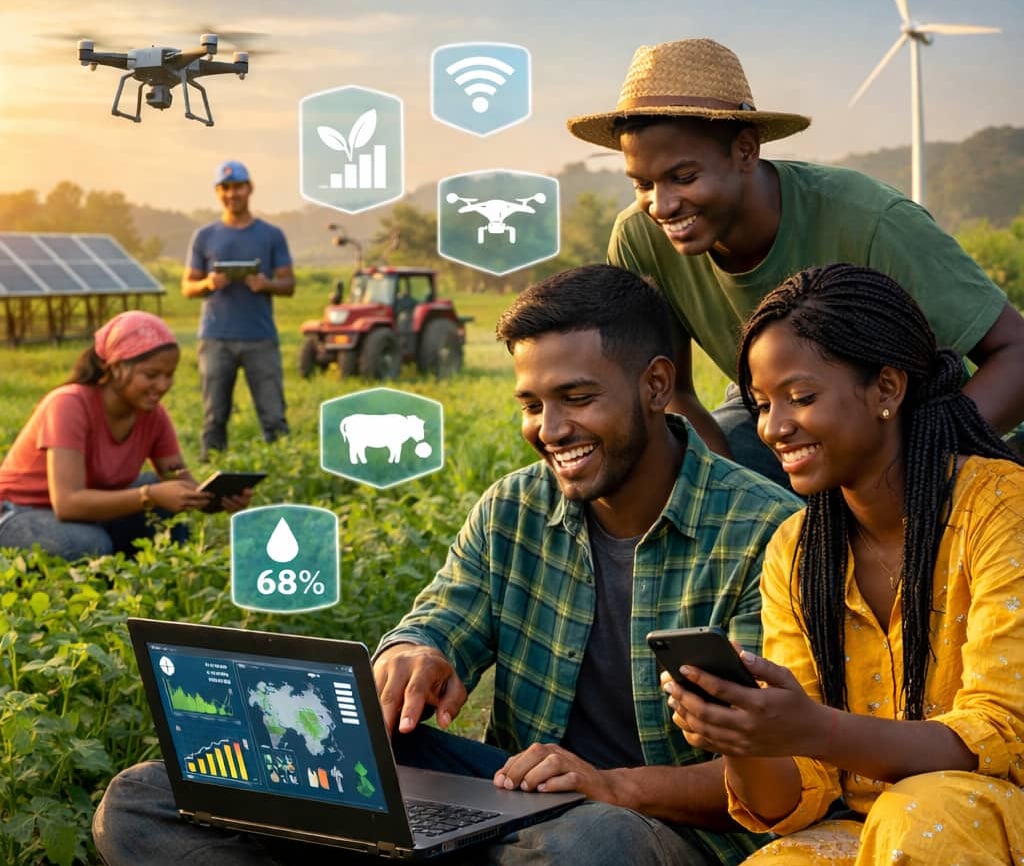
A recent conversation with an old-time classmate who studied agriculture reflects how many young people in Nigeria are gradually losing interest in agricultural-related courses. Frustrated and disillusioned, she said plainly, “Studying agriculture is useless and a waste of time. There are no white-collar jobs for us.” She added that she wished she had studied a medical course, believing that health-related professions guarantee employment immediately after graduation.
This sentiment was not isolated. Another graduate, who earned a first-class degree in Crop Science, later enrolled in a nursing school for the same reason: despite her academic excellence, she could not secure employment with her agriculture certificate. Together, these accounts reflect a broader reality shaping rural youth perceptions of agriculture in Nigeria.
Yet while many young people are turning away from agriculture, others are redefining it. Across rural communities, a growing number of youths are using digital tools, social media, and informal online platforms to create new opportunities within the agricultural sector.
Youth Perceptions of Agriculture: “No Jobs After Graduation”
For many Nigerian youths, agriculture is closely associated with unemployment, intensive farm labour, and poverty. University graduates often expect white-collar employment in offices, institutions, or corporations, and when such opportunities are scarce for agriculture graduates, disappointment quickly sets in.
The experiences of schoolmates highlight a common perception: agriculture as a field of study does not translate easily into formal employment. This belief pushes many young people to pursue second degrees in medical or allied health fields, which are widely viewed as more employable. As a result, agriculture loses some of its brightest minds—not because of a lack of interest in food production, but because of limited career visibility and weak institutional support.
A Different Path: Youths Who Stay and Innovate
Despite these discouraging narratives, not all young people abandon agriculture. Motivated by a desire to contribute to rural development, some choose a different path—one that moves away from waiting for white-collar employment and instead centres on innovation, entrepreneurship, and digital engagement.
Young farmers and agripreneurs in rural areas are increasingly combining agricultural knowledge with mobile technology. Smartphones have become tools for accessing market prices, weather forecasts, and farming advice. More importantly, they are used to create markets, not merely to search for jobs.
One young cassava farmer described how joining WhatsApp groups transformed her business. Rather than selling produce at giveaway prices to middlemen, she now posts available quantities and negotiates directly with buyers. For her, agriculture became profitable only when she stopped waiting for employment and began leveraging digital networks.
Youth-Led Digital Platforms for Market Information Sharing
Youth-led digital platforms—mostly informal and community-based—are becoming powerful tools for rural market coordination. These include:
WhatsApp and Telegram groups that link farmers, buyers, and transporters
Facebook pages and Instagram accounts used to advertise farm produce and processed goods
Mobile-based price-sharing networks through which youths exchange real-time market information
Through these platforms, young farmers reduce information gaps, avoid exploitation, and improve income stability. Unlike formal government programmes, these digital spaces are youth-driven, flexible, and closely adapted to rural realities. They require minimal capital yet deliver significant impact.
Rethinking “Useless”: What These Stories Really Tell Us
The movement of agricultural graduates into health-related fields does not indicate that agriculture lacks value. Rather, they reveal a disconnect between agricultural education, labour markets, and youth aspirations. Where formal employment fails, innovation steps in.
Youth-led digital platforms demonstrate that agriculture can be viable when supported by access to information, markets, and technology. They also show that the future of rural development depends not only on policy but also on empowering youths to create their own pathways.
Reimagining Rural Futures with Youth at the Center
The experiences shared in this post reveal two intertwined realities shaping agriculture for young people in Nigeria. On one hand, there is deep frustration, rooted not in a rejection of agriculture itself, but in the limited and often invisible pathways from agricultural education to meaningful livelihoods. On the other hand, there is quiet but powerful innovation, as young people remain in rural spaces, using digital tools, informal networks, and local knowledge to create opportunities where formal systems fall short.
These stories underscore that agriculture itself is not “useless”; instead, the institutional and structural frameworks surrounding it have failed to keep pace with youth aspirations and changing rural realities. Where institutions lag, young people are already experimenting, building markets, sharing information, and reshaping what it means to work and thrive in agriculture.
By amplifying rural voices, documenting youth-led digital innovations, and fostering critical conversations around agriculture, work, and rural life, it becomes possible to bridge the gap between frustration and possibility and to see rural youths not only as observers of change, but as partners in reimagining agriculture as a dynamic, creative, and socially relevant field.
Through storytelling, dialogue, and knowledge-sharing, we support rural futures that are inclusive, youth-responsive, and grounded in lived experience—where staying, innovating, and building livelihoods in rural communities is a viable and dignified choice, not a last resort.